
OVER 40?

Over 40? Your Eyes May Be Changing

If you’re over 40, you may have noticed some changes in your close-up vision.

Such changes may include:

  • needing to hold things farther away from you to see them clearly
  • difficulty reading smaller print
  • having difficulty staying focused on your computer screen

These are all common as you get more and more candles on your birthday cake.

This loss of your ability to focus up close is a natural aging process called presbyopia. Presbyopia eventually happens to everyone and can really affect your lifestyle if not appropriately treated.
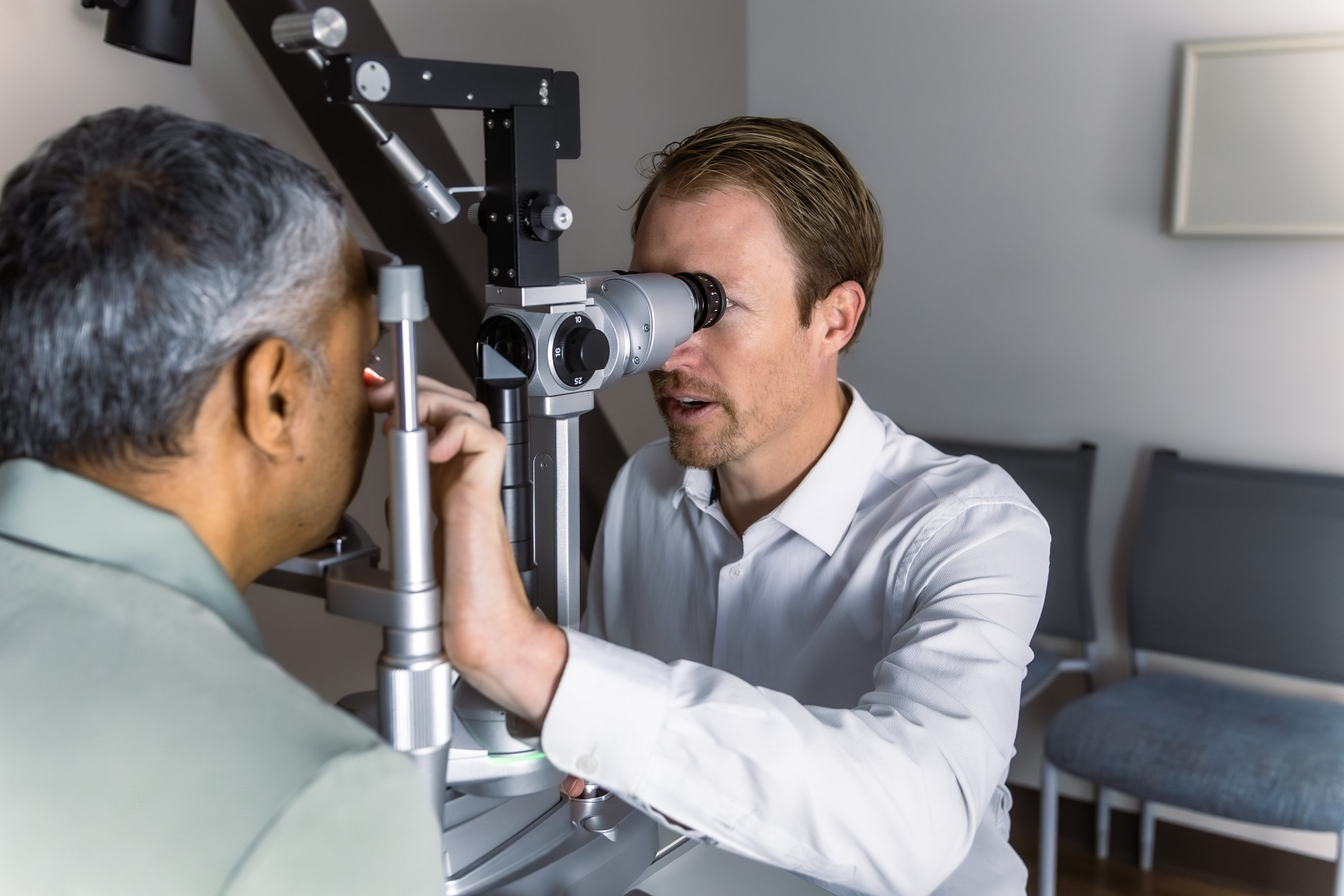
Eye examination at Davis Vision Center in South Jordan, Utah

Age Shouldn’t Stand in the Way of Clear Vision


As we age presbyopia becomes progressively noticeable and our ability to see different distances becomes narrowed such that if we see well at distance then we don’t see well at near and vice versa. Often we gradually hold objects further away to read them. Eventually we need bifocal or trifocal glasses. Bifocal glasses allow us to see far and near but not so well at intermediate distances. Trifocals have a top section for distance, middle for intermediate, and bottom for near. We also have progressive glasses which gradually change as you look through the top to middle to bottom of the glasses. They do this without the noticeable lines in the glasses that you see in traditional bifocal or trifocal glasses. Thus without the lines in the lenses the progressive glasses may not make you appear quite so old.

 
We also now have eyedrops such as Vizz, Vuity, and Qlosi. These drops constrict your pupils and thus extend your depth of focus allowing you to read without glasses until the drop wears off. These can give you up to 10 hours of near vision. These generally work better in earlier presbyopes 40-70 years old.
 
There are other treatments for Presbyopia. Some individuals prefer monovision where one eye is corrected for distance, and the other for near. This can be accomplished with contacts, Lasik, or even cataract surgery.
 
If you happen to have cataracts then, during cataract surgery, your surgeon may be able to place a bifocal or multifocal lens inside your eye. Doing so allows you to see some distance, intermediate, and near vision without glasses.  Your cataract surgeon can alternatively place a Light Adjustable Lens where you can possibly “test drive” monovision to see if it works and if not then you can adjust it again to remove the monovision.
 
If you do not have a cataract then your surgeon may be able to perform Refractive Lens Exchange (RLE). A bifocal, multifocal, or a Light Adjustable Lens can also be used to give you more range of vision similar to cataract surgery.
 
At Davis Vision Center, we understand that everyone is different and has unique visual needs. If you’re over 40 and have noticed issues with seeing well, give a call. There’s no maximum age for improving your life with better vision!
Dr. Holmes consulting with patient at Davis Vision Center in South Jordan, Utah

CONTACT US TODAY!

Every patient deserves clear vision and compassionate care. At Davis Vision Center, we combine advanced technology with decades of surgical expertise to provide comprehensive eye care tailored to your unique needs, helping you see your best at every stage of life.